Datadog Alternatives: 6 Observability Tools for 2026
Datadog Alternatives: 6 Self-Hosted Observability Options for 2026
Datadog's billing surprises engineering leaders every quarter. The base infrastructure plan is $15/host/month. APM is another $31/host. Logs are $0.10/GB ingested with retention upcharges. Synthetic monitoring is per check. A 50-host SaaS with reasonable log volume routinely sees Datadog bills cross $15K/month.
The pricing is justifiable for what Datadog does — broad coverage, mature alerting, strong APM correlation, dashboards that actually surface incidents. But for many teams, the math stops working when growth and log volume scale together. The alternatives have gotten meaningfully better in 2026, and the open-source path is more realistic than ever.
For a deeper rubric on what AI ops surface in incidents, see our Best AI Ops Dashboard Templates 2026 listicle.
Or skip the build entirely: get NeuralDesk
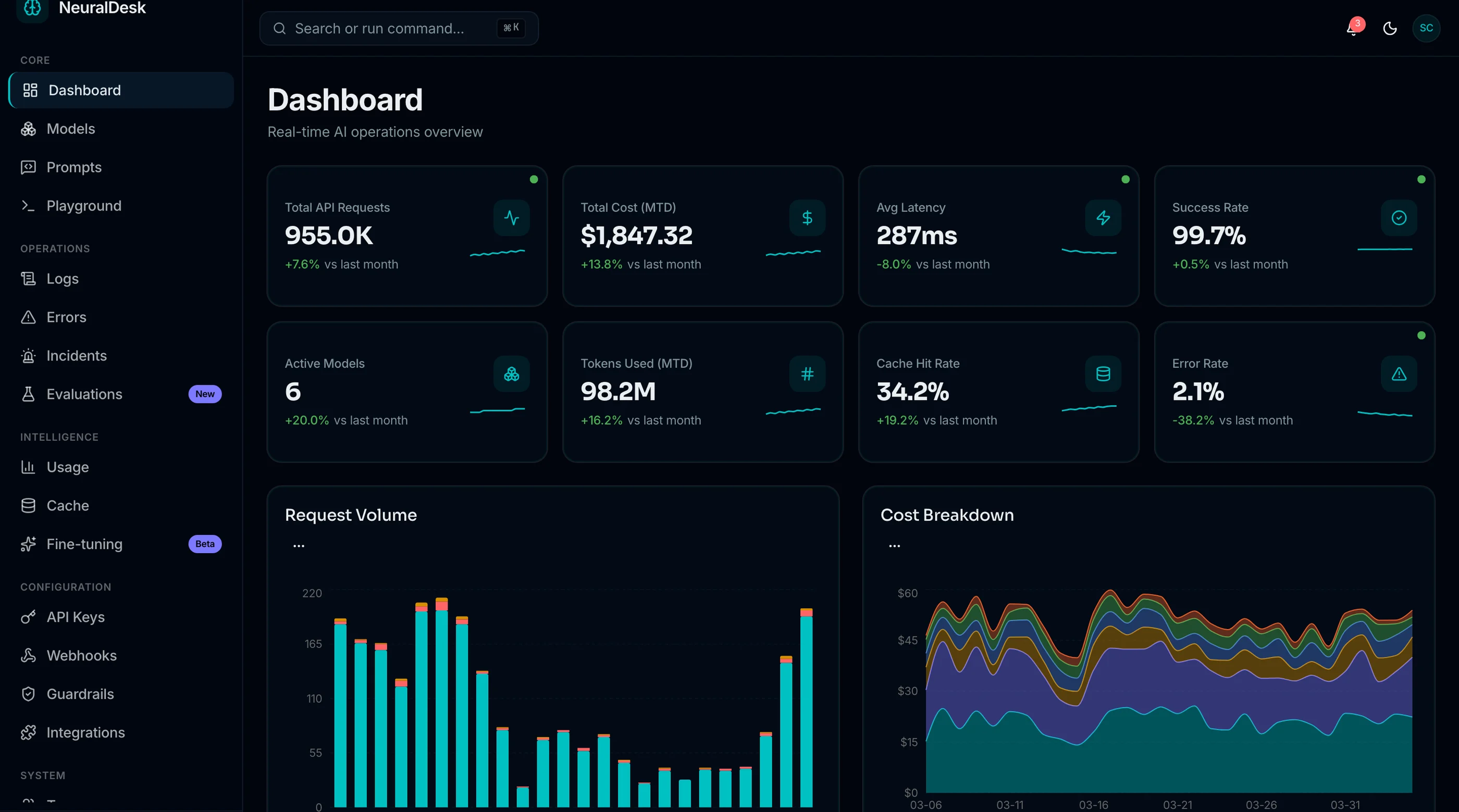
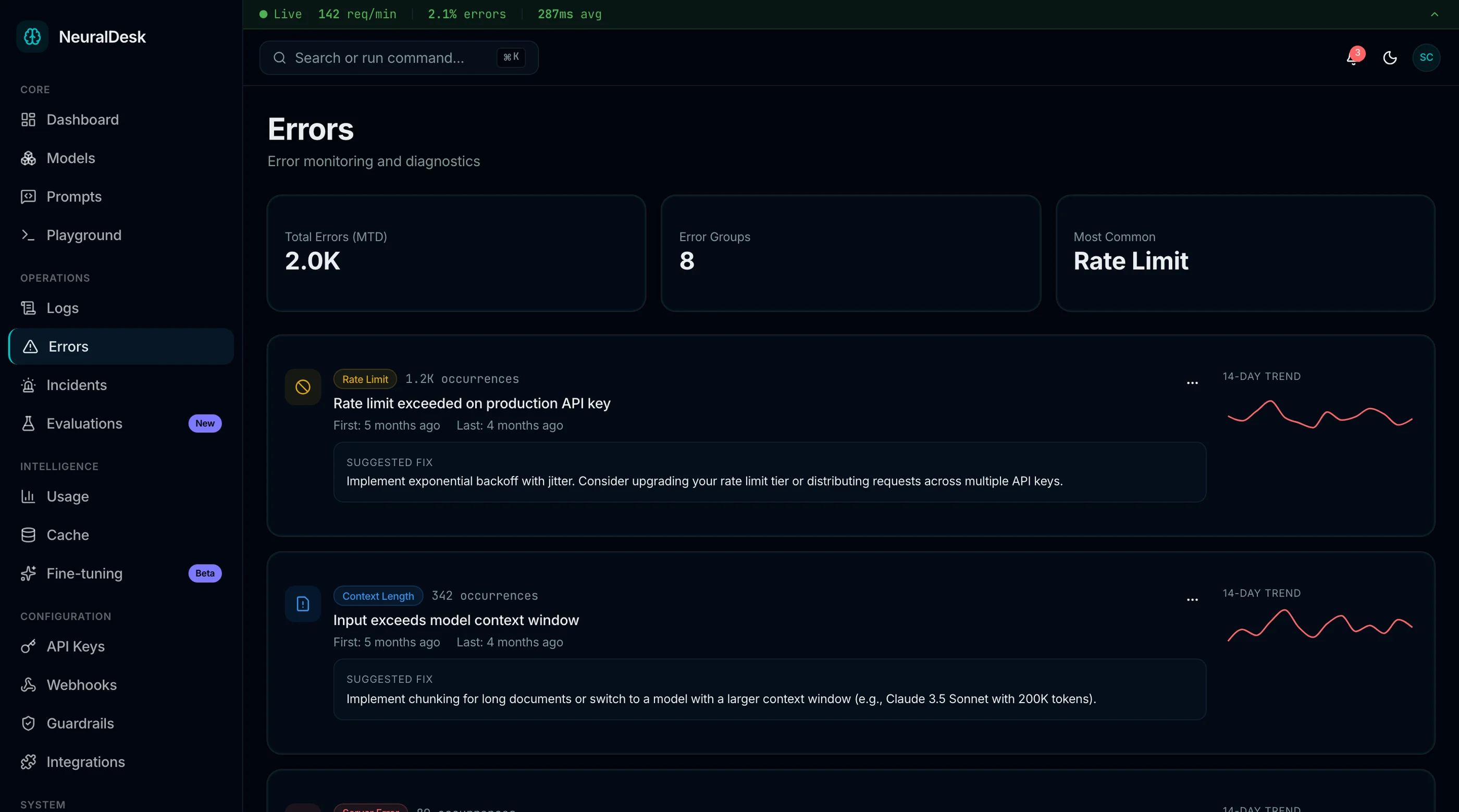
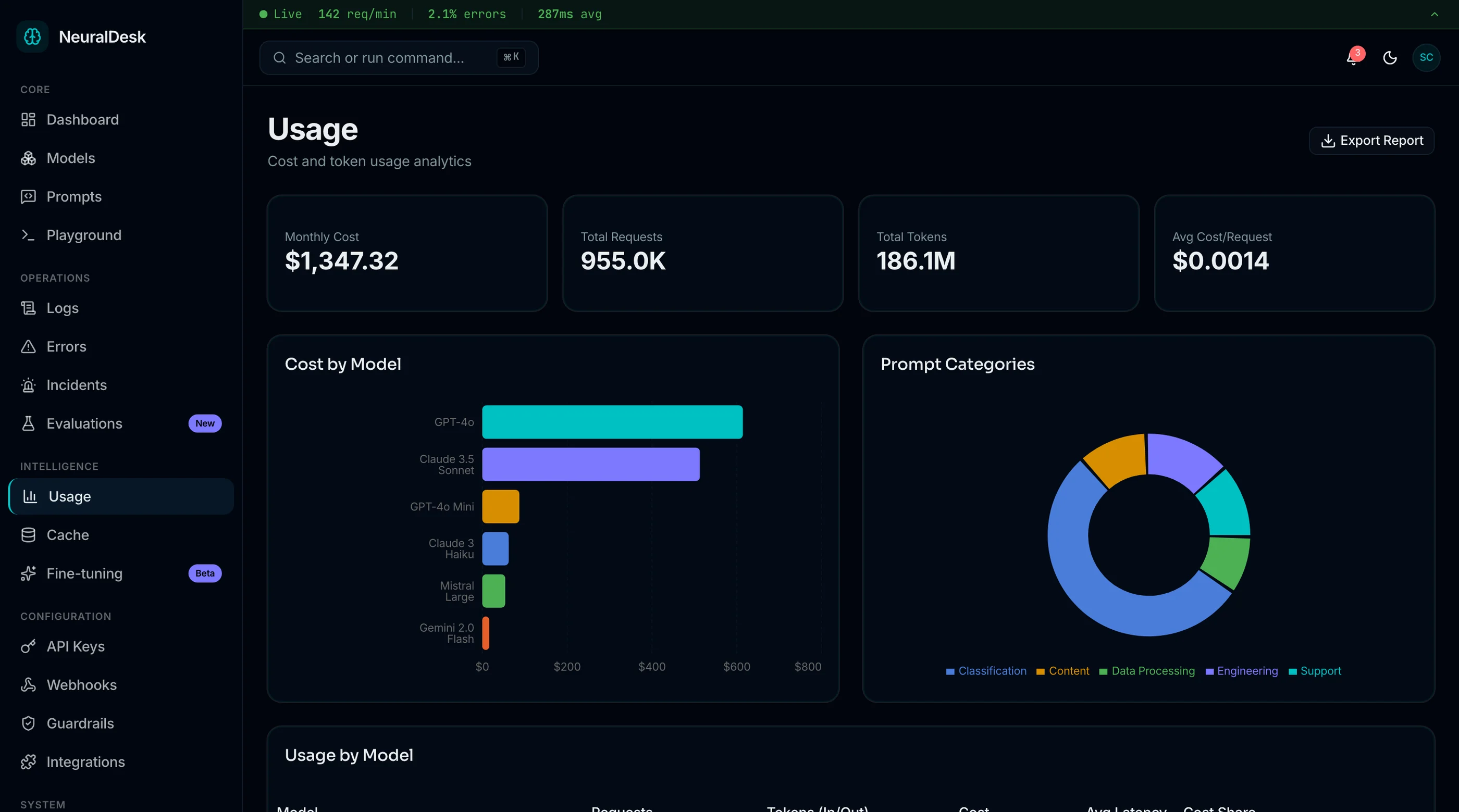
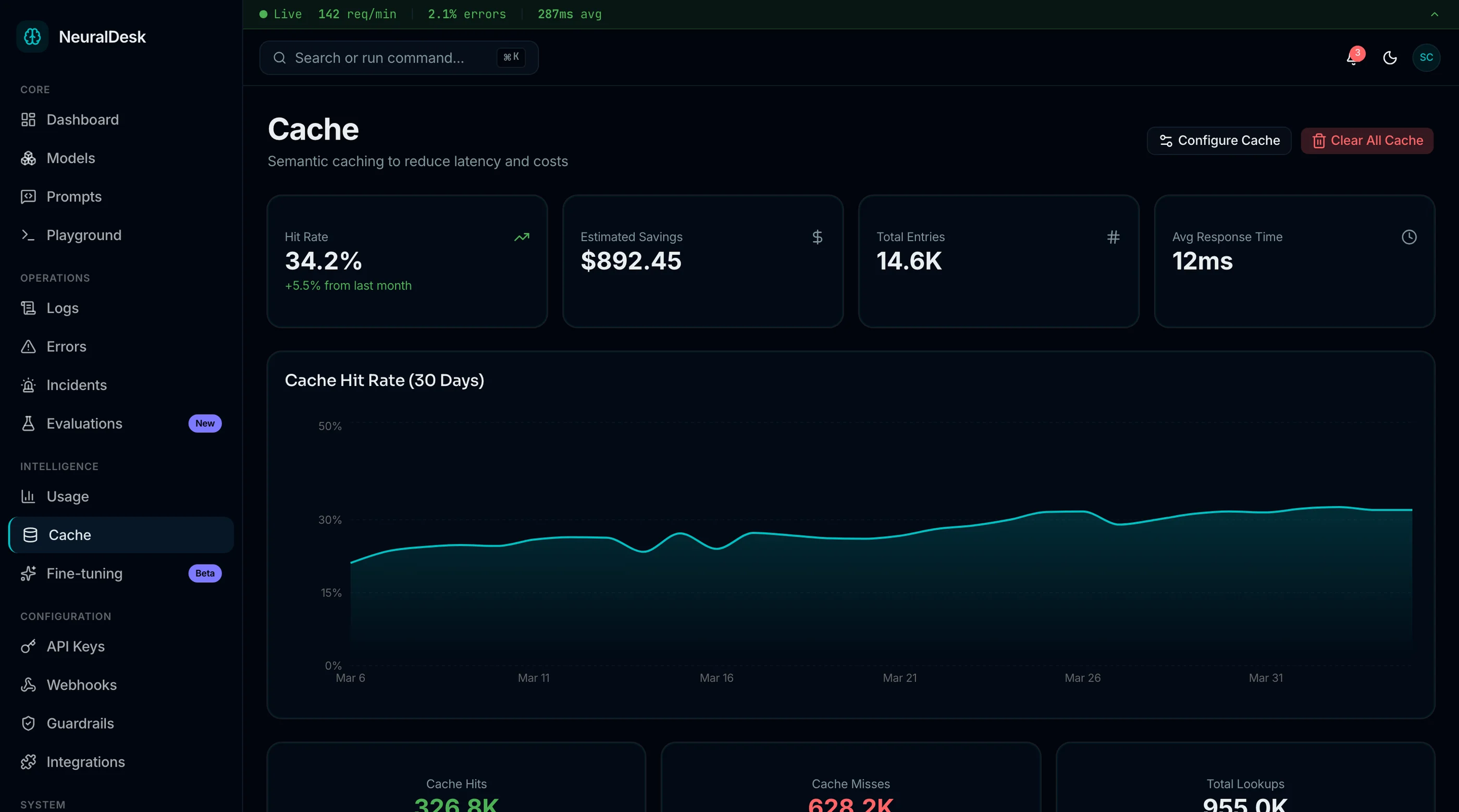
The NeuralDesk AI Ops Dashboard is shipped: screens for incidents, alerts, agent reasoning, service health, runbooks, on-call rotation, post-mortem timelines. Built for teams adding AI-powered triage on top of their observability stack. Next.js + Tailwind + shadcn/ui. $131 solo, $199 team, $349 agency.
Get NeuralDesk → or get every kit (18 total) for $749 via All UI Kits →
TL;DR: Quick Picks for 2026
| Need | Top pick | Price |
|---|---|---|
| Hosted full-stack observability | Grafana Cloud | $0 free / $19+/mo |
| Datadog-equivalent hosted | New Relic | $0 free / $0.30/GB+ |
| Open-source full-stack | SigNoz | Free (self-host) |
| Metrics-only DIY classic | Prometheus + Grafana | Free (self-host) |
| Better uptime / logs / status | Better Stack | $24+/mo |
| AI-augmented ops dashboard | NeuralDesk | $131+ |
What Datadog Actually Does Well
Worth saying clearly: Datadog has the broadest integration catalog in the market (700+). Their APM correlation across services is best-in-class. The dashboarding is mature. Their security-and-compliance product (Cloud SIEM, ASM) makes it a one-stop shop for enterprises that want fewer vendors.
The case for alternatives isn't that Datadog is bad. It's that the pricing model penalizes log volume specifically and grows non-linearly with hosts.
When to Leave Datadog
Three signals:
- Bill crosses $10K/month and shows no signs of stabilizing.
- Log retention costs dominate the bill (most common pain point — you're paying to store debugging data nobody reads).
- Compliance requires self-hosting (some EU customers, healthcare, financial services).
1. Grafana Cloud
The hosted version of the Grafana stack. The closest "I want Datadog but for one-tenth the price" option. (Coming from the other direction? See our Grafana alternatives guide.)
Strengths:
- Free tier is genuinely usable for small teams (10K metrics, 50GB logs)
- Paid tiers start at $19/mo, scale predictably
- Grafana dashboards are best-in-class for customization
- Includes metrics (Prometheus), logs (Loki), traces (Tempo), profiles (Pyroscope)
- Open-source compatibility — easy migration to self-hosted later
Weaknesses:
- More assembly required than Datadog (you wire the pieces)
- Less polished alerting than Datadog's
- Synthetic monitoring is paid add-on
- Some integrations require manual config
Best for: Engineering-strong teams that want a Datadog-class observability stack at 1/5 the cost and don't mind doing more wiring.
2. New Relic
The original APM vendor, reborn in 2020 with consumption-based pricing.
Strengths:
- Free tier with 100GB ingest/month — actually generous
- Strong APM correlation, comparable to Datadog
- Pricing model based on GB ingested + user seats (more predictable than per-host)
- Polished dashboards, mature alerting
Weaknesses:
- Consumption pricing can also surprise (it's just a different shape of surprise)
- Some workflows feel dated vs Datadog's UI
- Logs pricing climbs at scale
- Migration from Datadog is non-trivial
Best for: Teams that want hosted observability with a different pricing axis from Datadog. Especially good for low-host high-traffic scenarios.
3. SigNoz
Open-source full-stack observability built on OpenTelemetry from day one.
Strengths:
- Free, MIT, Apache-based stack
- Native OpenTelemetry (the standard in 2026)
- Metrics + logs + traces in one self-hostable package
- Active development, real production deployments
- Cloud offering available if you want hosted ($199+/mo)
Weaknesses:
- Self-hosting needs ClickHouse + Kubernetes comfort
- Newer than Grafana stack, fewer integrations
- UI is improving but lags Datadog's polish
- Alerting features are good, not best-in-class
Best for: Teams committed to OpenTelemetry who want a single self-hostable observability stack. Cloud-native shops especially.
4. Prometheus + Grafana (Self-Hosted Classic)
The original open-source observability stack. Metrics-only by default; add Loki for logs, Tempo for traces.
Strengths:
- Free, the gold standard for self-hosted metrics
- Massive ecosystem — every major cloud, every database, every runtime has exporters
- Battle-tested at every scale
- Federation pattern for multi-region
Weaknesses:
- It's a stack of pieces, not a product
- You operate Prometheus (TSDB management is real work)
- Long-term storage requires extra layer (Thanos, Cortex, Mimir)
- Alerting UX is more janky than hosted competitors
Best for: Engineering-strong teams who already run Kubernetes, want full control, and have someone who likes operating Prometheus.
5. Better Stack
Uptime monitoring + log management + incident management, hosted, with strong status pages.
Strengths:
- Polished uptime monitoring (synthetic checks, multi-region)
- Logs at $0.20/GB after free tier, more competitive than Datadog
- Incident management (on-call, paging, response) included
- Status page tool is one of the best
- $24-$250/month, predictable
Weaknesses:
- APM is weaker than Datadog or New Relic
- Less broad integration catalog
- Smaller team behind it
- Some advanced features still on the roadmap
Best for: SaaS teams that want uptime + logs + status page + incident management in one tool without the APM overhead.
6. NeuralDesk: The AI-Augmented Layer
NeuralDesk isn't a Datadog replacement — it's the AI ops layer that sits on top of your existing observability stack. Datadog, Grafana, New Relic, SigNoz, or any combination feeds into it. The dashboard surfaces incidents, agent reasoning, runbook suggestions, on-call routing, and post-mortem timelines.
What it covers:
- Incident timeline with agent-generated context
- Alert grouping and noise reduction
- Service health overview across observability sources
- Runbook surfacing based on alert pattern
- On-call rotation and handoff UI
- Post-mortem template + timeline reconstruction
- Agent reasoning trace (why did the AI suggest restart vs scale-up?)
What it doesn't:
- Replace your metrics/logs/traces backend
- Provide the APM (you bring Datadog/New Relic/SigNoz)
- Do the alerting itself (it consumes alerts)
Best for: Engineering teams that already have observability and want an AI-augmented incident management layer that respects how their team actually works.
Recommendation by Stack
| Profile | Pick |
|---|---|
| Small team, Datadog bill is fine | Stay on Datadog |
| Mid-size team, bill is uncomfortable | Grafana Cloud or New Relic |
| OpenTelemetry-committed, want self-host | SigNoz |
| Kubernetes-native, engineering-strong | Prometheus + Grafana + Loki |
| Want uptime + status pages first | Better Stack |
| Have observability, want AI ops layer | NeuralDesk |
| Building an observability product yourself | NeuralDesk (UI) + your data layer |
The Honest Take
Datadog wins on convenience. The alternatives win on cost, control, and (in NeuralDesk's case) on the layer Datadog doesn't address well: how the team actually responds to incidents.
The under-explored move for many teams: keep Datadog (or whatever observability you have) and add a focused incident-management AI layer on top. The observability stack is good at "what's broken." The AI ops layer is good at "what should we do about it."
For the failure modes that hit AI ops dashboards specifically, see Why AI Ops Dashboards Don't Prevent Incidents.
Want it shipped without hiring a developer?
The build path above assumes you have engineers. If you don't, the team behind thefrontkit does done-for-you launches: we deploy the kit, apply your branding, and wire it to your stack. Fixed quotes, most builds ship in 2-4 weeks, from $1999.