Why Self-Hosted Help Desks Stall After Six Months
Why Self-Hosted Help Desks Stall After Six Months
The pattern is so common it's almost a meme. A founder gets fed up with Zendesk's pricing, spins up Zammad or FreeScout or Chatwoot, and the first month is great. Six months later they're back on Zendesk, citing "it just wasn't working." The platform didn't fail. Five specific operational things failed at the same time.
Worth naming what they are, because the failure is preventable. Most teams just don't see it coming.
Or skip the build entirely: get the Help Desk Kit
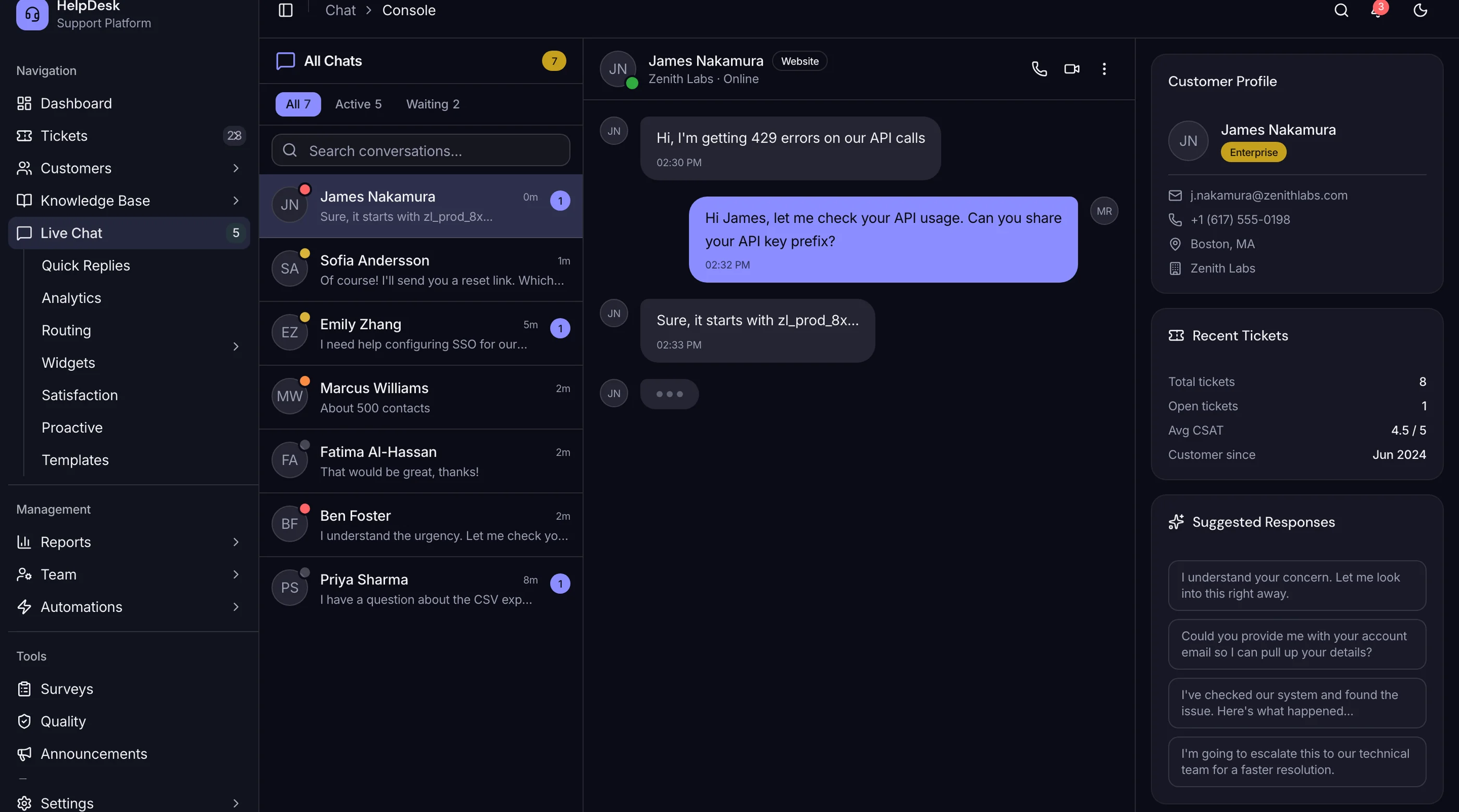
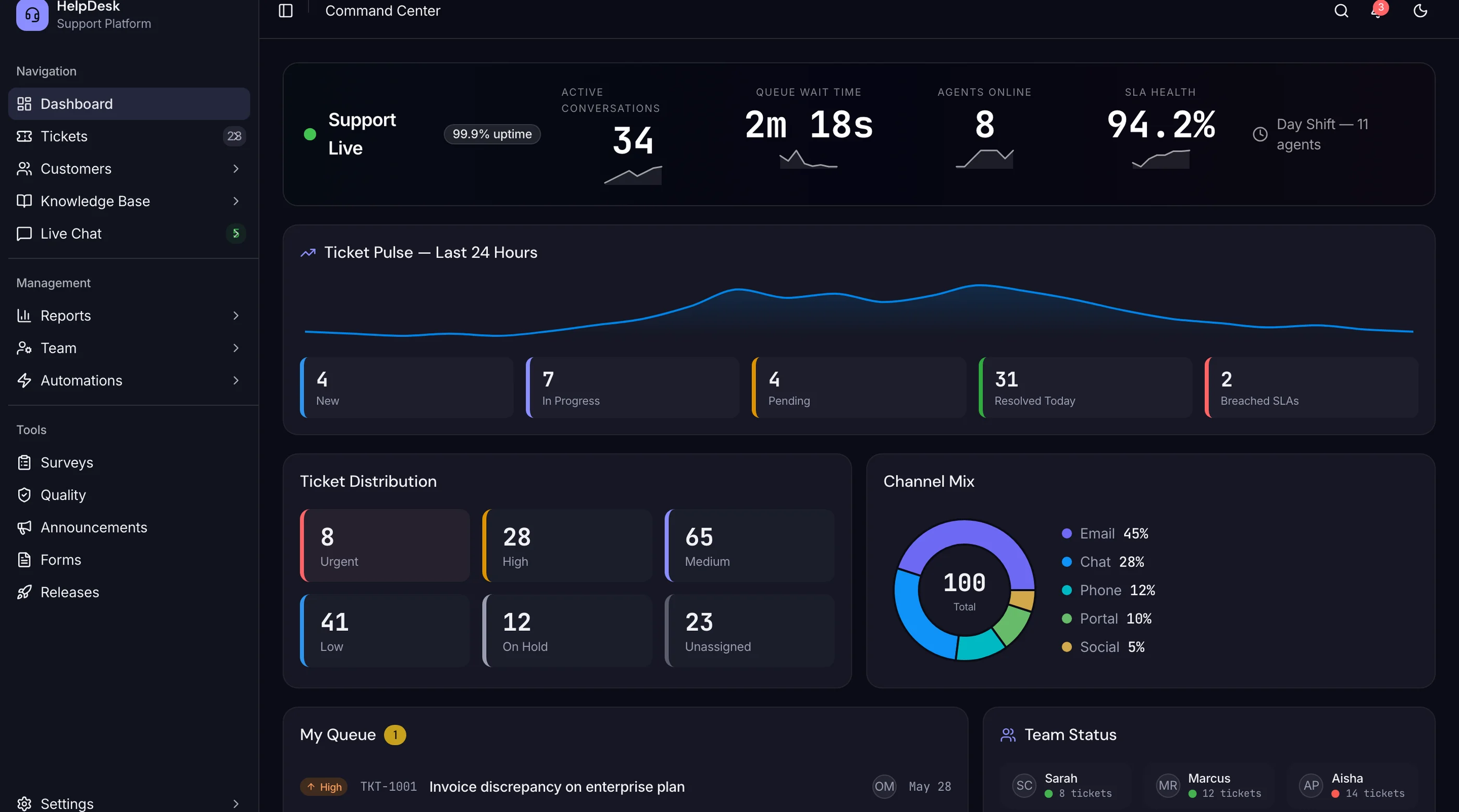
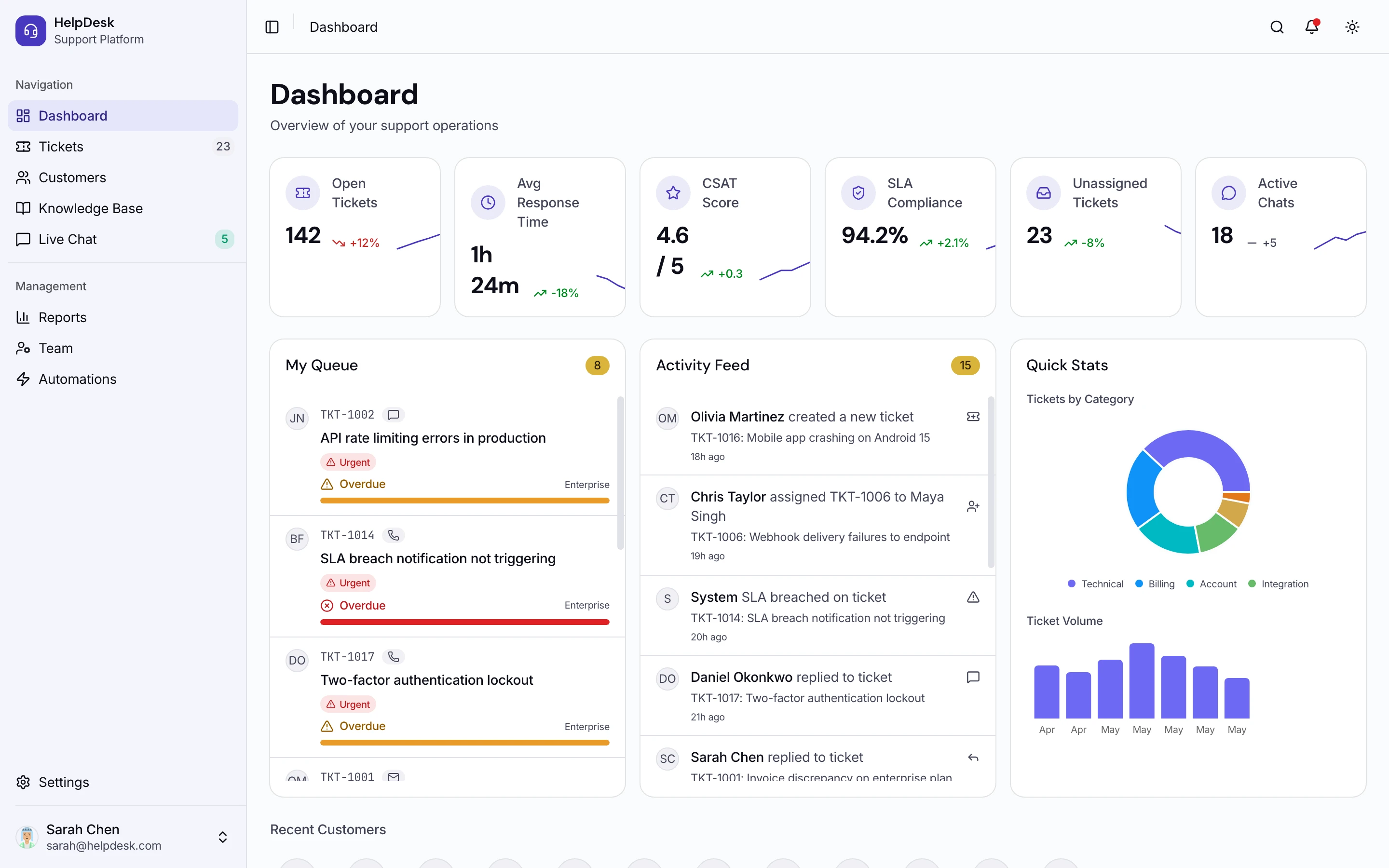
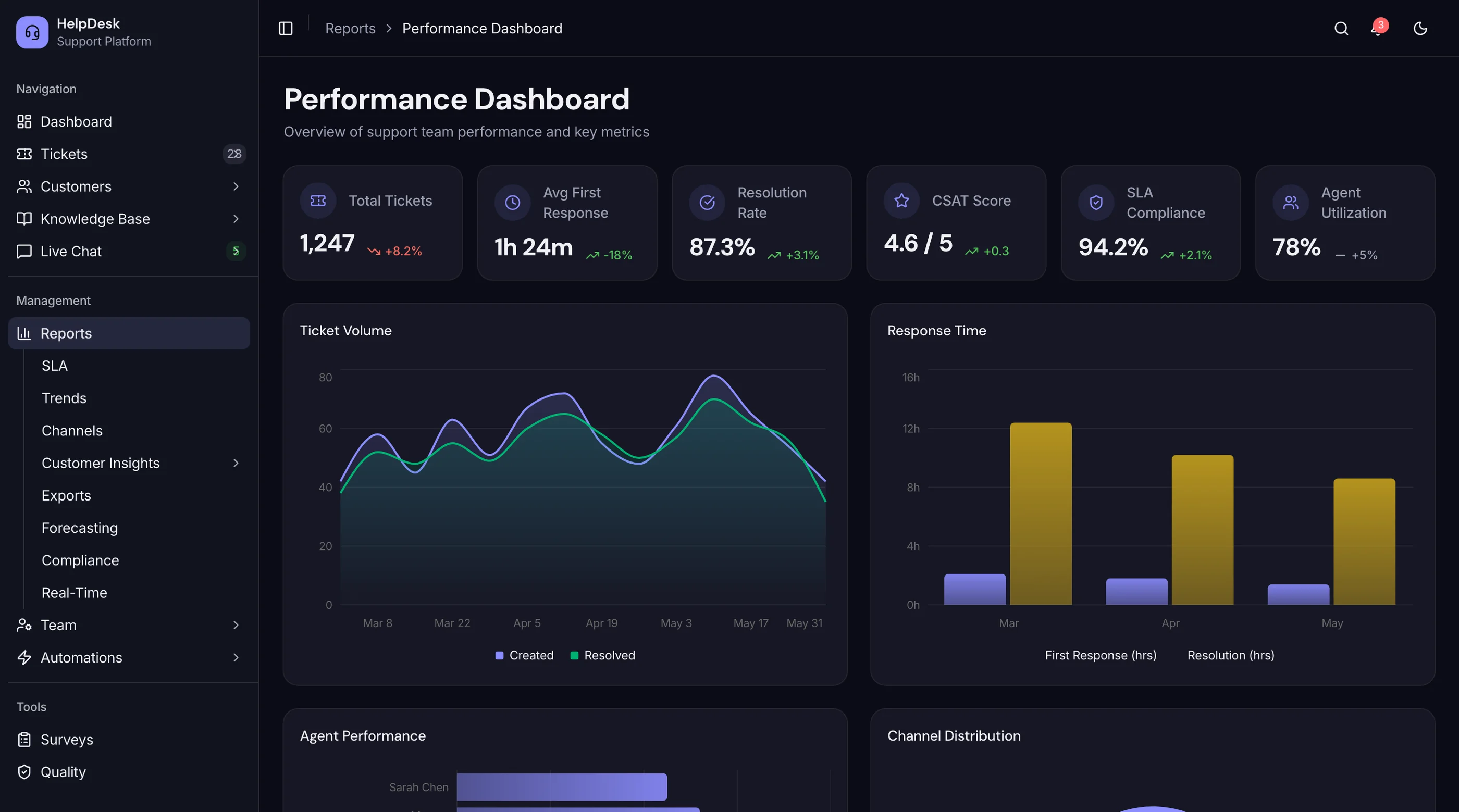
The Help Desk Kit is shipped with the operational gotchas above baked in: routing as TypeScript files (not admin-UI clicks), internal notes visually separated from customer replies, and reporting designed for materialized views. Next.js + Tailwind + shadcn/ui. $131 solo, $199 team, $349 agency.
Get the Help Desk Kit → or get every kit (18 total) for $749 via All UI Kits →
Failure 1: Email Deliverability Decay
The biggest one. Self-hosted help desks send replies from your domain. If your SPF, DKIM, and DMARC records aren't dialed in (and tuned as your sending volume grows), your replies start landing in spam.
What happens: customers stop replying. Tickets sit. Your team sees an empty queue and assumes things are quiet. Two weeks later you get a Twitter complaint about "I've been waiting two weeks for a reply" and realize the whole outbound channel went silent.
How to prevent: monitor SPF/DKIM alignment monthly, use a dedicated sending IP if volume justifies it, plug in a deliverability tool (Postmark, SendGrid analytics, GlockApps). Get the bounce rate dashboard in front of someone weekly.
Zendesk handles this in their managed sending infrastructure. Self-hosted means you handle it.
Failure 2: The Knowledge Base That Never Got Written
Every self-hosted help desk ships with a knowledge base module. Every team plans to populate it. Almost no team does.
What happens: agents keep answering the same 30 questions over and over. Senior agents quit because the work feels repetitive. Junior agents take longer to resolve tickets because they can't search for answers. Average resolution time creeps up. Customer satisfaction drops.
How to prevent: assign one person 4 hours a week to extract repeat questions from the inbox into KB articles. Track which articles get hit by search. Reward agents who write articles instead of just answering tickets. Make the KB the first thing the bot suggests on inbound.
This is a process problem disguised as a tooling problem. Buying Zendesk doesn't fix it. Building doesn't fix it either. Hiring discipline does.
Failure 3: Workflows Hard-Coded in the Admin UI
Self-hosted help desks like Zammad and Chatwoot let you build automation rules in the admin UI. Trigger on this, route to that, set this SLA, send this canned response. The first 20 rules are clean. The next 100 are a tangled mess.
What happens: a senior agent leaves. They were the one who knew that "billing-related tickets after 6pm go to Sarah unless they're refunds in which case they go to finance unless the refund is over $500 in which case they need manager approval." Now nobody knows. New tickets route incorrectly. Customers wait. Refunds slip through.
How to prevent: store routing logic in version control, not in the admin UI. A simple YAML or JSON config file checked into git is more maintainable than 100 admin-UI rules. When you migrate to a different help desk, you migrate the config. When the senior agent leaves, the logic is in the repo.
This is the deeper case for building your own: routing logic as code is more maintainable than routing logic as admin clicks.
Failure 4: Mobile UX Was an Afterthought
Self-hosted help desk projects almost always launch with a serviceable web app and a "mobile coming soon" promise. The mobile app, when it arrives, is functional and missing the features agents actually use.
What happens: support managers and on-call engineers can't triage from their phone. The 11pm escalation that should take 5 minutes takes 45. Weekend coverage gets harder. Senior staff burn out.
How to prevent: pick a help desk that already has a real mobile app before you commit. Zammad's is okay, Chatwoot's is decent, FreeScout's is web-mobile-only. Don't believe the roadmap; check the app store reviews.
Failure 5: Reporting Dies When Ticket Volume Crosses 5K/Month
Most self-hosted help desks start fast. Reports render in 200ms. Queries against the ticket database are snappy. At 5,000 monthly tickets, performance still holds. At 25,000, dashboards take 30 seconds. At 100,000, they time out.
What happens: leadership stops looking at the dashboard. Decisions get made on gut feel. The support team's case for headcount or process changes loses the data backing.
How to prevent: index the ticket database on the columns reports query (status, assigned_agent, created_at, sla_breach). Materialize daily summary tables nightly. Move reporting off the live ticket database if needed. Most self-hosted help desks don't do this by default.
The Cumulative Effect
Any one of these failures is recoverable. All five hitting in the same quarter is what kills self-hosted help desk projects. Email deliverability tanks while the KB is empty and routing is broken, all on a mobile experience that doesn't let the team triage from anywhere except a desk. Six months in, you're back evaluating Zendesk.
The teams that succeed with self-hosted help desks treat the five problems as a checklist, not as future work. They hire or assign someone to own them. They invest in the operational layer, not just the tool.
What to Do Instead
If you're early enough to make the call: pick a help desk where the five things are someone else's problem. That's the actual value of Zendesk's $89/agent pricing. They handle deliverability, mobile, performance, and most of the operational surface. You pay them to make those problems disappear.
If you want to self-host or build, accept that one person on your team needs to own the five failures. Not as a side project. As a real responsibility.
If you're building, the routing-as-code pattern (Failure 3) is the unfair advantage. Help desks where the logic is in version control are dramatically more maintainable than admin-UI-driven systems.
For the comparison of hosted vs self-hosted options, see Zendesk Alternatives: 6 Self-Hosted Help Desk Options for 2026. For the build path, see How to Build a Help Desk in Next.js.
The Shortcut
The Help Desk Kit ships with the five failures in mind: routing logic in TypeScript files (not admin UI), email deliverability documented for Postmark, mobile-first agent UI, and reporting designed for materialized views. The kit doesn't fix the discipline problems (you still need to write KB articles), but it removes the tooling reasons projects fail.
Get the Help Desk Kit → or See All UI Kits →
The honest take: most self-hosted help desk failures are operational, not technological. The tooling is mature enough. What's missing is a team that treats the platform like a product, not like an IT installation.