HubSpot Alternatives: 8 CRM Options for 2026
HubSpot Alternatives: 8 Options Compared for 2026
HubSpot's free CRM is the best free CRM ever made. That's exactly the problem. The free tier gets you in, your data and workflows settle deep into it, and then growth walks you up the pricing ladder: Starter is fine at $15-$20/seat/month, but Sales Hub Professional jumps to $90-$100/seat/month plus a mandatory onboarding fee, and Marketing Hub Professional starts around $800/month before contacts-based pricing kicks in. Teams call this the free-to-paid cliff.
Leaving isn't easy, which is also by design. HubSpot is sticky in the good way (everything's integrated) and the bad way (your email history, workflows, and reporting don't export cleanly). Eight alternatives worth comparing before, or after, you hit the cliff.
We've compared the sales-pipeline side of this market before in our Pipedrive alternatives guide; this one looks at it from the HubSpot side, where marketing and the free tier change the math.
Or skip the build entirely: get the CRM Dashboard Kit
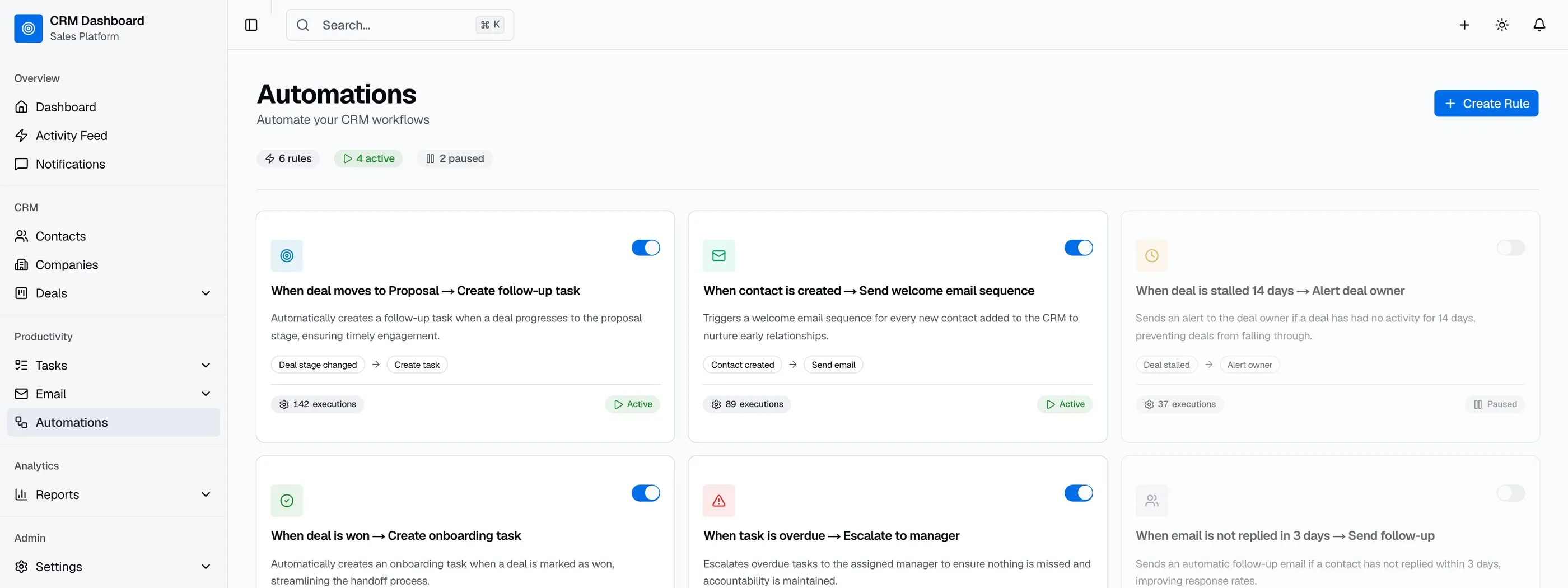
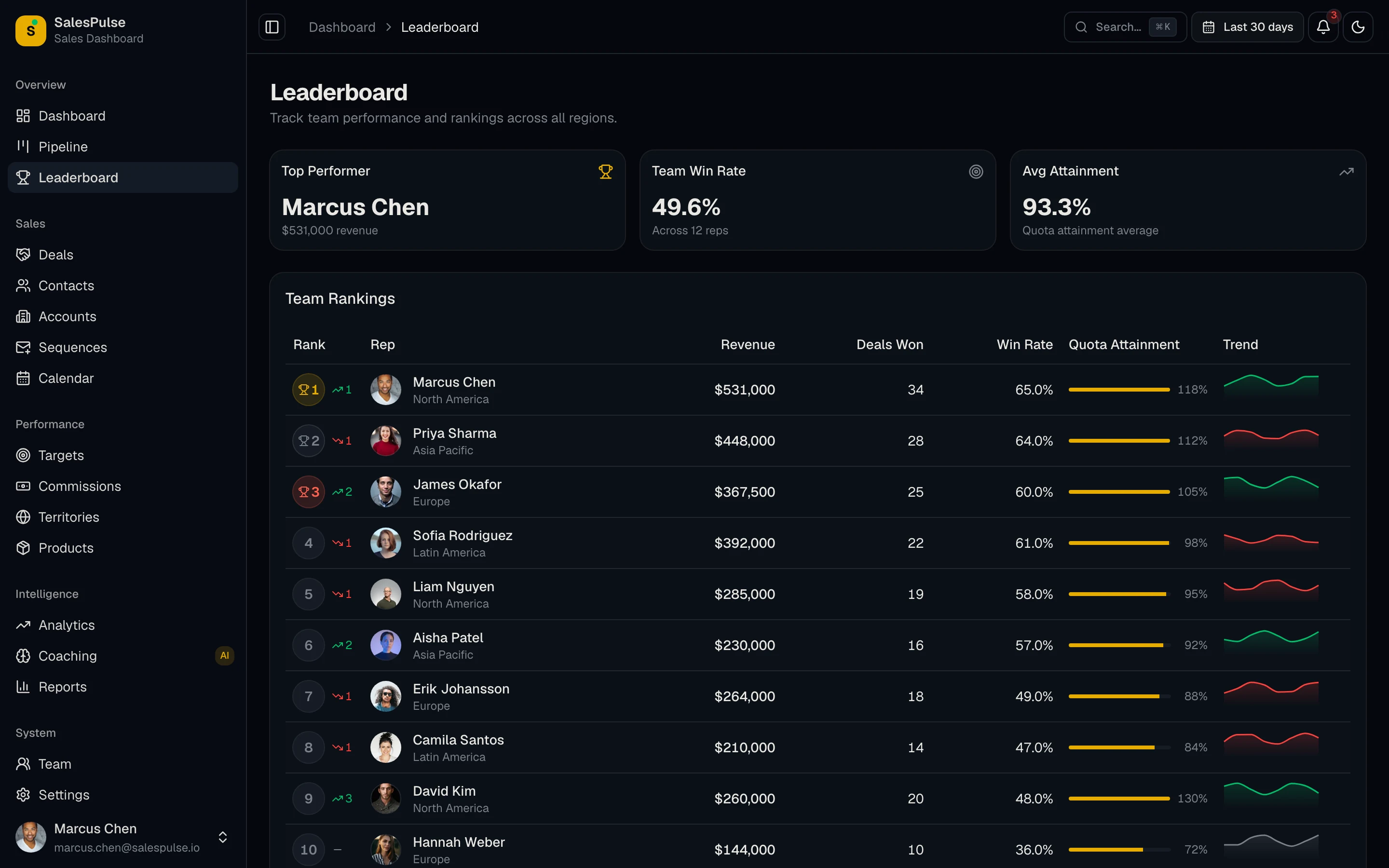
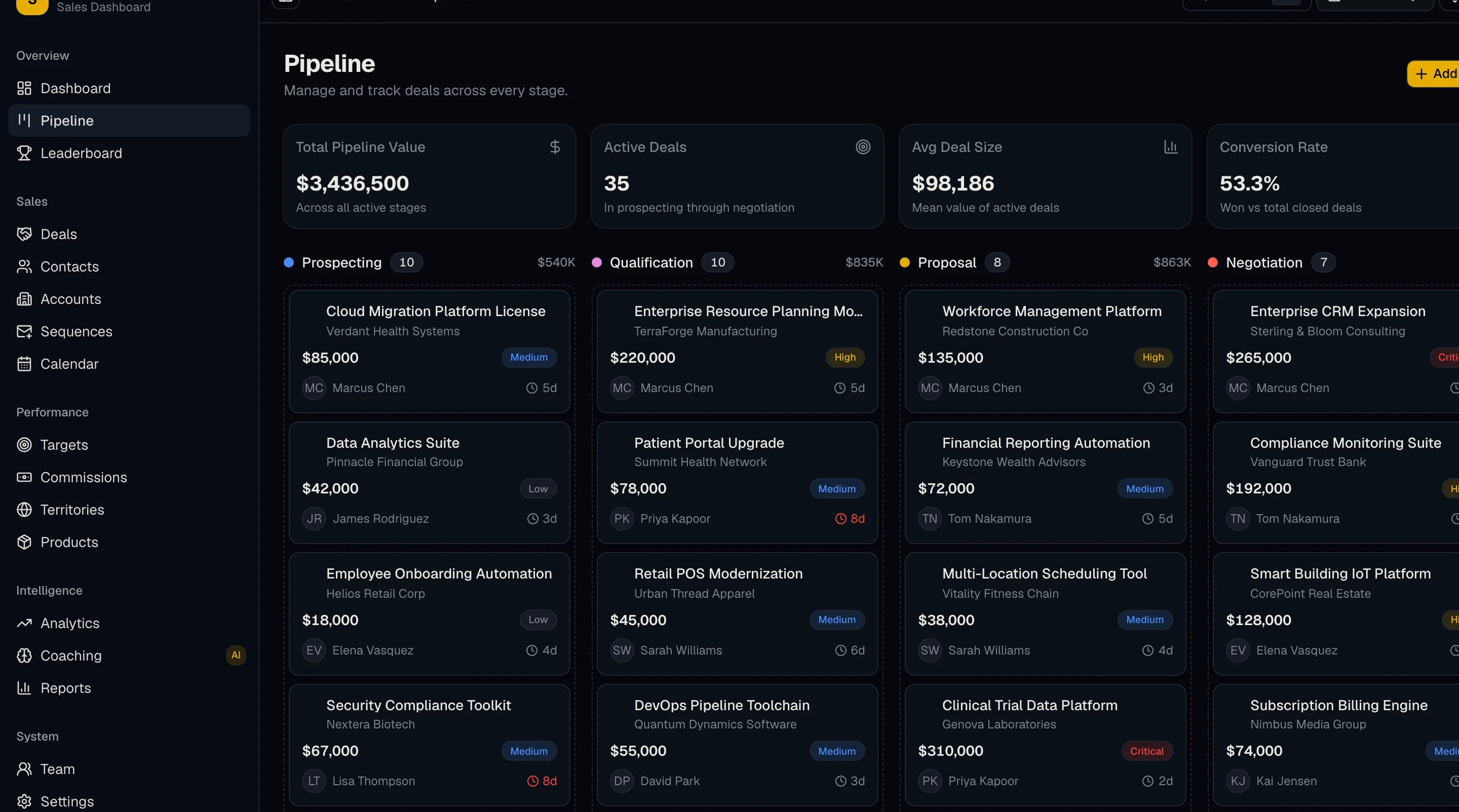
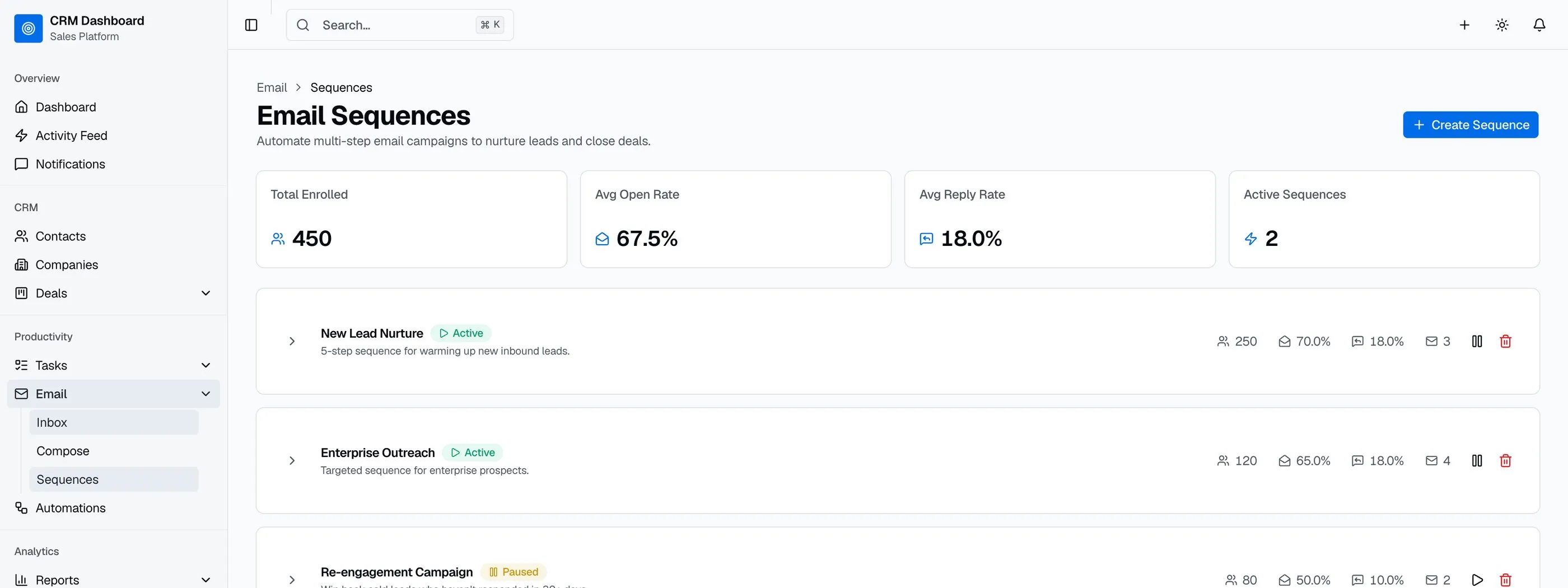
The CRM Dashboard Kit is shipped: 42 screens with Kanban pipeline, contact and company management with activity timelines, deal tracking with forecasting, email inbox UI, and 4 analytics dashboards. Next.js + Tailwind + shadcn/ui, WCAG AA. $165 solo, $199 team, $349 agency. Try the live demo.
Get the CRM Dashboard Kit → or get every kit (18 total) for $749 via All UI Kits →
TL;DR: Quick Picks for 2026
| Need | Top pick | Price |
|---|---|---|
| Cleanest sales pipeline UX | Pipedrive | $24+/user/mo |
| Most CRM per dollar | Zoho CRM | $14+/user/mo |
| HubSpot-like with native calling | Freshsales | $9+/user/mo, 21-day trial |
| Outbound/SDR machine | Close | $99+/user/mo |
| Flexible data model, modern UI | Attio | Free tier, $29+/user/mo |
| Open-source modern CRM | Twenty | Free (self-host) |
| Open-source traditional CRM | EspoCRM | Free (self-host) |
| CRM UI inside your own product | thefrontkit CRM Dashboard Kit | $165+ |
What HubSpot Actually Does Well
No serious list pretends HubSpot is bad. The free CRM is genuinely useful. The all-in-one story (CRM + marketing + service + CMS) is real, and for teams that use the whole platform, the integration between hubs saves actual headcount. Reporting across marketing and sales in one place is something most of the alternatives below simply can't do.
The case for alternatives is narrower and sharper: you're paying platform prices for one hub's worth of usage, or the pricing cliffs don't match how you grow, or you need ownership the cloud can't give you.
When to Leave HubSpot
Three signals:
- You're paying Professional prices for Starter usage. The jump from ~$20 to ~$90-100/seat is where most teams do the audit.
- Contacts-based pricing is charging you for a list you don't email. Marketing Hub bills on stored contacts, engaged or not.
- The CRM needs to live inside your product (customer-facing pipeline, partner portal) and embedding HubSpot isn't a thing.
1. Pipedrive
The pick when you want the sales pipeline and nothing else.
Strengths:
- The cleanest deal-pipeline UX in the category; reps learn it in a day
- Priced for sales alone: $24-$64/user/month with no marketing platform tax
- Solid automation engine and mobile app
- Huge marketplace of integrations
Weaknesses:
- No serious marketing side (that's the point, but it cuts both ways)
- Reporting is lighter than HubSpot Professional
- Per-seat costs still compound at scale
Best for: Sales-led teams that were only using HubSpot's deal board anyway. We compared its own alternatives in depth in the Pipedrive alternatives guide.
2. Zoho CRM
The value pick. Half the price, arguably more features.
Strengths:
- $14-$52/user/month; the whole ladder costs less than HubSpot's second rung
- Deep feature set: workflows, scoring, forecasting, territory management
- Zia AI included on mid tiers
- The wider Zoho suite covers marketing, desk, and books if you want the all-in-one story at a fraction of the price
Weaknesses:
- Busier UI; onboarding takes longer than HubSpot or Pipedrive
- Easy to configure yourself into a mess
- Support quality varies by plan and region
Best for: Teams that want HubSpot's breadth without HubSpot's invoice and will trade a week of setup for it.
3. Freshsales
The closest like-for-like swap for HubSpot's sales side.
Strengths:
- Paid from $9/user/month billed annually, with a 21-day trial
- Phone, email, and chat built into the base product
- Freddy AI scoring and insights on paid tiers
- Freshworks suite (Freshdesk, Freshmarketer) mirrors the multi-hub story cheaply
Weaknesses:
- Reporting depth trails HubSpot Professional
- Smaller marketplace
- AI features gated to higher tiers
Best for: Small and mid-size teams that liked HubSpot's approach and want 80% of it at 20% of the price.
4. Close
The outbound specialist.
Strengths:
- Built-in power dialer, SMS, and email sequences; no bolt-ons
- Designed around activity volume, which HubSpot handles generically
- Reporting oriented to calls, reach rates, and rep activity
Weaknesses:
- $99-$199+/user/month, pricier than HubSpot Starter by a lot
- Wrong shape for inbound-led or marketing-heavy teams
- No free tier
Best for: SDR-heavy orgs running 50+ calls per rep per day, where HubSpot's sales tools always felt like a compromise.
5. Attio
The modern CRM for teams whose data model never fit HubSpot's objects.
Strengths:
- Fully flexible objects and views; model partnerships, ABM, or marketplaces natively
- The best UI on this list, real-time and collaborative
- Free tier for small teams; paid from $29/user/month
- API-first, webhook-friendly, popular with product-led startups
Weaknesses:
- Classic sales-management features (quotas, forecasting) still maturing
- Gets expensive at Pro/Enterprise tiers
- You design the process; blank flexibility isn't for everyone
Best for: Startups and non-standard sales motions that fought HubSpot's data model more than they used it.
6. Twenty
The open-source modern CRM.
Strengths:
- Free, MIT-licensed, self-hostable; no per-seat fees ever
- Modern stack (React, GraphQL, Postgres) and a UI closer to Linear than to legacy CRM
- Custom objects and a growing plugin system
- Cloud-hosted option if self-hosting palls
Weaknesses:
- Young feature set; no marketing automation story
- Integrations trail the SaaS incumbents badly
- You own upgrades, backups, and uptime
Best for: Developer-led teams that want CRM data on their own infrastructure and are comfortable with a project that's still filling out.
7. EspoCRM
The mature open-source workhorse.
Strengths:
- 10+ years old, feature-complete: contacts, accounts, opportunities, cases, calendar, reporting
- Free self-hosted; inexpensive cloud tiers
- Customizable from the admin UI without code
- Email campaigns module covers basic marketing needs, which Twenty doesn't
Weaknesses:
- PHP/LAMP stack to operate
- Dated UI, weak mobile experience
- Deeper customization means writing PHP
Best for: Teams that want the fullest free CRM feature set, self-hosted, and value maturity over polish.
8. Build the CRM Frontend with the CRM Dashboard Kit
The build path solves the problem no hosted CRM can: the CRM experience living inside your product. A customer-facing pipeline in your SaaS. A partner portal with deal visibility. A vertical CRM for one industry where HubSpot's generic objects never fit.
What this looks like:
- Your backend owns the data model (accounts, deals, activities you already store)
- The CRM Dashboard Kit provides the frontend: Kanban pipeline with keyboard-accessible drag-and-drop, contact and company detail views with activity timelines, deal tracking with forecasting, email inbox UI, task management, and 4 analytics dashboards
- 35+ screens, Next.js + Tailwind + shadcn/ui, WCAG AA accessible, design-token rebrandable
- You wire it to your API, or sync from HubSpot/Pipedrive and keep them as systems of record
$165 solo, $199 team, $349 agency. Try the live demo. For a direct feature-by-feature look at this path against HubSpot, see CRM Kit vs HubSpot.
Recommendation by Team Profile
| You | Pick |
|---|---|
| Only used HubSpot for the deal board | Pipedrive |
| Want breadth at half the price | Zoho CRM |
| Want the HubSpot shape, cheaper | Freshsales |
| Outbound SDR machine | Close |
| Data model never fit standard objects | Attio |
| Self-hosted, modern stack | Twenty |
| Self-hosted, maximum features free | EspoCRM |
| CRM inside your product | Build with the CRM Dashboard Kit |
Pricing at a Glance (10-Person Team, Annual)
| Product | Typical tier | ~Annual cost (10 seats) |
|---|---|---|
| HubSpot Sales Hub (Starter) | $20/user/mo | $2,400 |
| HubSpot Sales Hub (Professional) | $90/user/mo | $10,800 + onboarding fee |
| Pipedrive (Professional) | $49/user/mo | $5,880 |
| Zoho CRM (Enterprise) | $40/user/mo | $4,800 |
| Freshsales (Pro) | $39/user/mo | $4,680 |
| Close (Professional) | $99/user/mo | $11,880 |
| Attio (Pro) | $59/user/mo | $7,080 |
| Twenty (self-hosted) | Free | Hosting only (~$240-600) |
| EspoCRM (self-hosted) | Free | Hosting only (~$240-600) |
| CRM Dashboard Kit + your backend | One-time $165-$349 | $165-$349 once, plus hosting |
Directional numbers; check current pricing pages. The HubSpot-specific catch is the Starter-to-Professional jump: it's not a step, it's a 4-5x cliff, and Marketing Hub's contact-based pricing stacks on top.
Frequently Asked Questions
What is the best free alternative to HubSpot?
Hosted, there's no longer a like-for-like free option: Freshsales dropped its free plan and starts at $9/user/month. Self-hosted, Twenty gives you a modern CRM free forever, and EspoCRM gives you the fullest free feature set. Remember though: HubSpot's own free tier is excellent. The reason to leave is what happens to pricing after it, so audit the upgrade path, not the free tier.
What is the best open-source alternative to HubSpot?
Twenty for a modern stack and UI. EspoCRM for feature completeness, including a basic email campaigns module that covers the light-marketing use case most small teams actually have.
Is Pipedrive or Zoho better than HubSpot?
Different trades. Pipedrive beats HubSpot on pipeline UX and sales-only pricing but has no marketing side. Zoho matches more of HubSpot's breadth at roughly half the cost but with a steeper learning curve. If you use HubSpot's marketing and sales hubs together heavily, neither fully replaces it.
How hard is it to migrate off HubSpot?
Contacts, companies, and deals export cleanly via CSV or API, and every tool on this list ships a HubSpot importer. The sticky parts are email threads, marketing workflows, and historical attribution reporting, which don't map anywhere cleanly. Plan the migration in two phases: move the pipeline first, keep read-only HubSpot access for history, and rebuild only the workflows you can prove you use.
Can I keep HubSpot's free CRM and build my own dashboard on top?
Yes, and it's an underrated setup. HubSpot free remains the system of record, reps keep the familiar UI, and you pull data through the (free) API into your own dashboard with your own forecast logic and views. The CRM Dashboard Kit provides that frontend layer; you'll never hit the paid tiers for reporting because you own the reporting.
The Honest Take
HubSpot earns its price for teams that genuinely run marketing, sales, and service on one platform. Most teams don't. They ride the free tier, hit the cliff, and pay platform prices for a pipeline and some email.
The alternatives each pick one fight: pipeline UX (Pipedrive), value (Zoho), the same shape cheaper (Freshsales), outbound (Close), data-model freedom (Attio), or ownership (Twenty, EspoCRM). And when the CRM needs to live inside your product, none of the rentals fit; that's the build path.
For the frontend-roundup view of this space, see Best CRM Dashboard Templates.
Want it shipped without hiring a developer?
The build path above assumes you have engineers. If you don't, the team behind thefrontkit does done-for-you launches: we deploy the kit, apply your branding, and wire it to your stack. Fixed quotes, most builds ship in 2-4 weeks, from $1999.