Zendesk Pricing 2026: Every Plan, Add-On and Real Cost
Zendesk Pricing 2026: What It Actually Costs
Short answer: Zendesk starts at $19 per agent per month for Support Team (email ticketing only). The full Suite costs $55 on Team, $89 on Growth and $115 on Professional, per agent per month billed annually. Monthly billing costs $69, $115 and $149. Enterprise is quote-only. A 20-agent team on Suite Professional pays $27,600 a year before add-ons, and adding Copilot takes that to $39,600.
We pulled every number on this page from Zendesk's US pricing page and help center in September 2026. Where Zendesk doesn't publish a price, we say so instead of guessing.
Or skip the per-agent model: get the Help Desk Kit
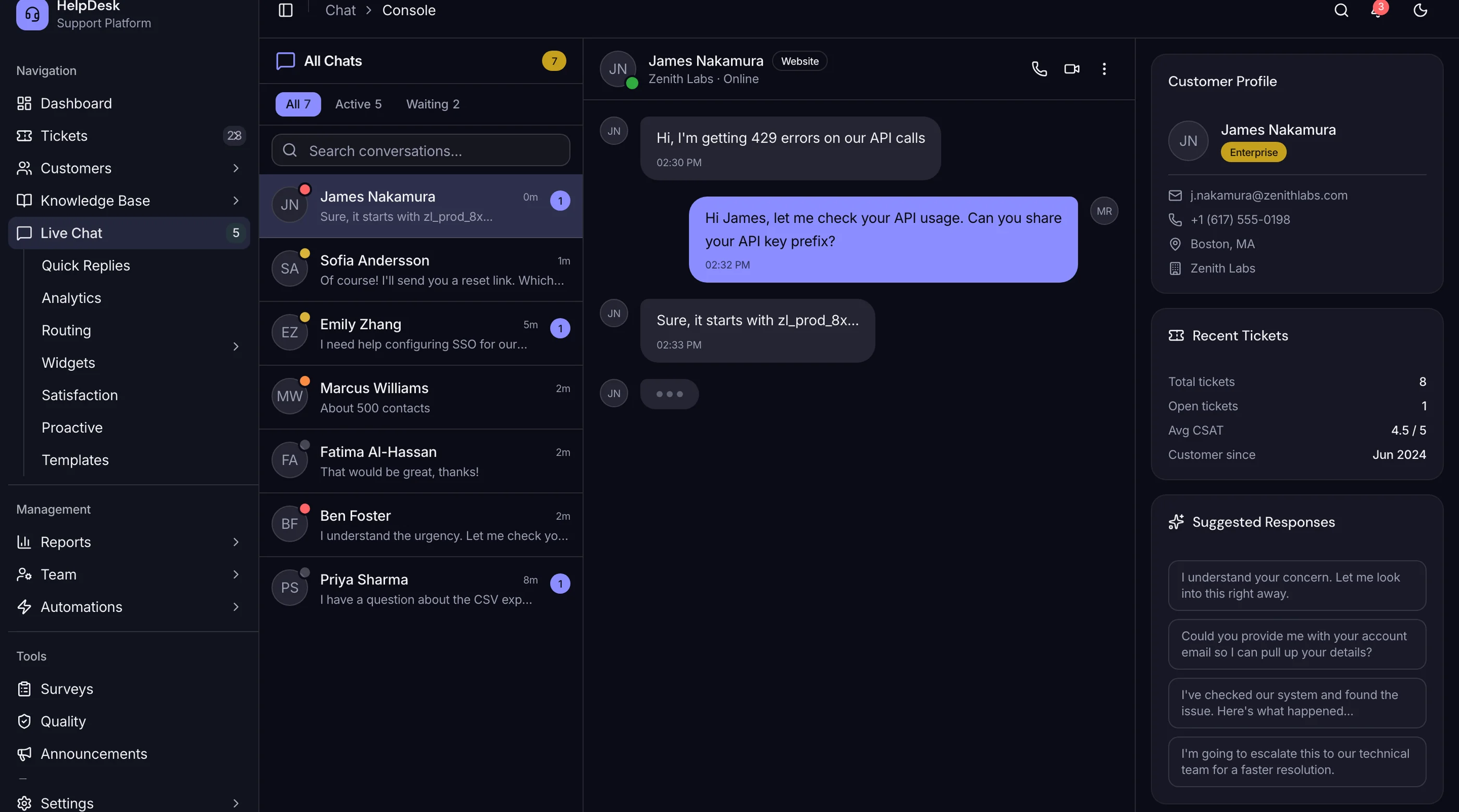
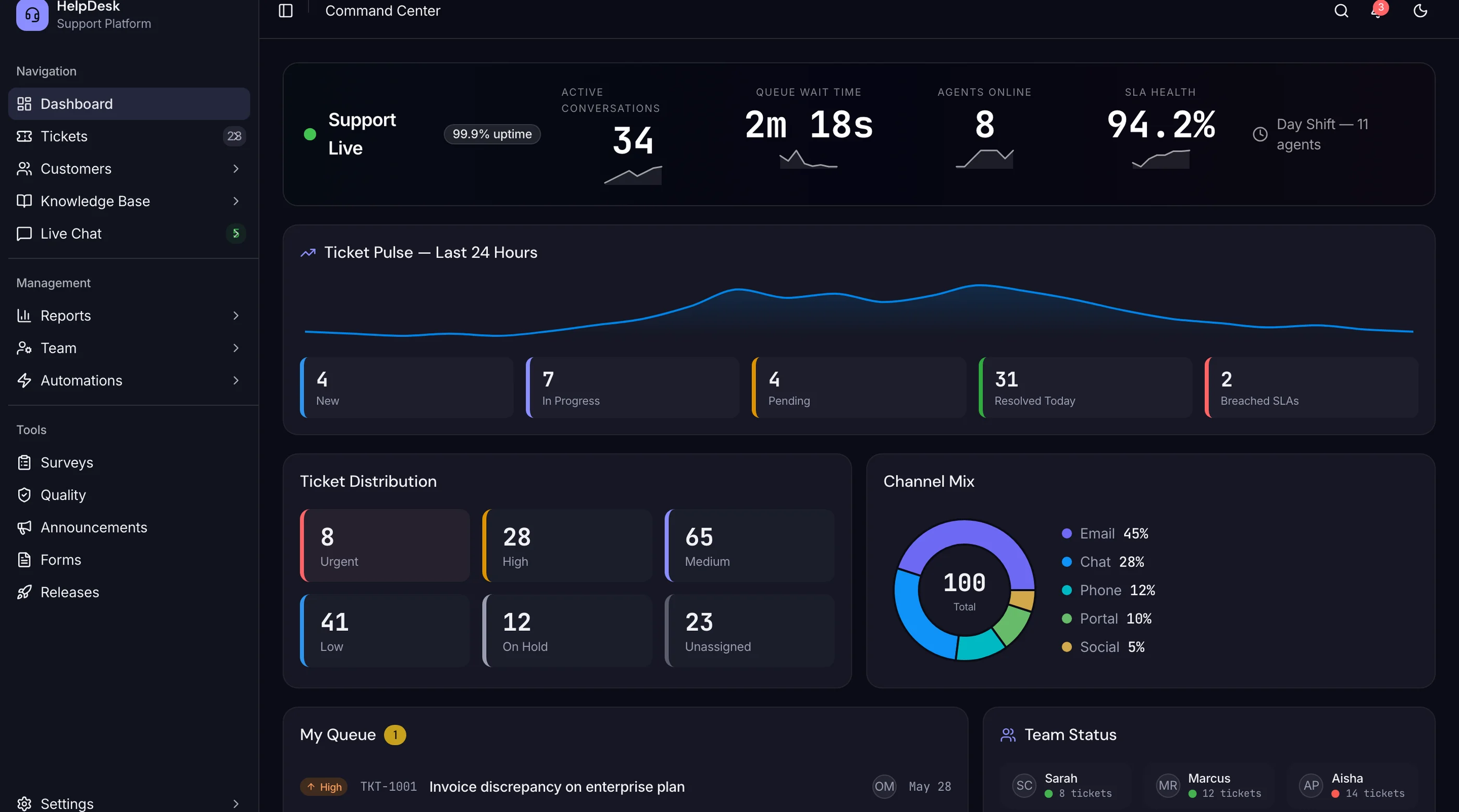
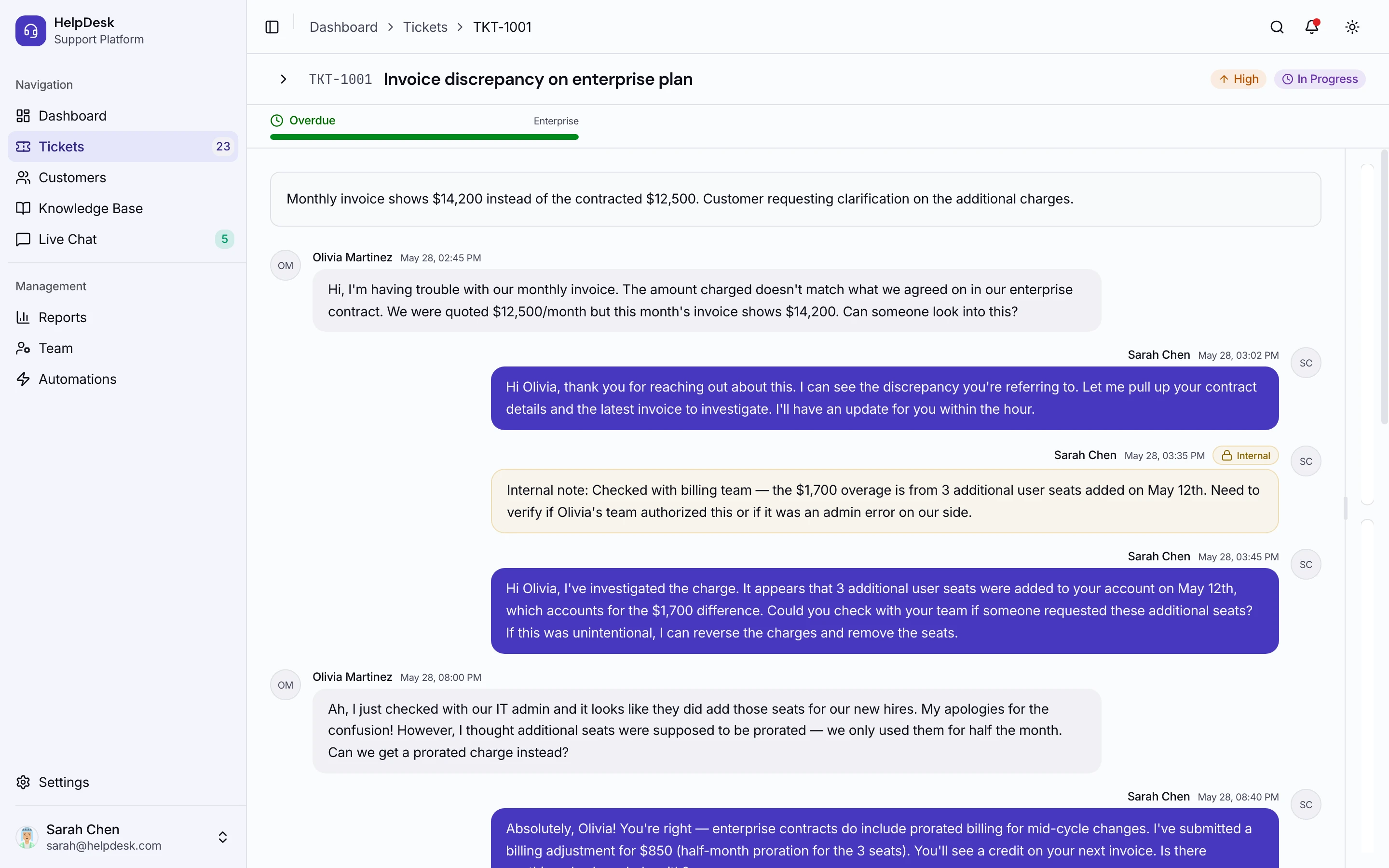
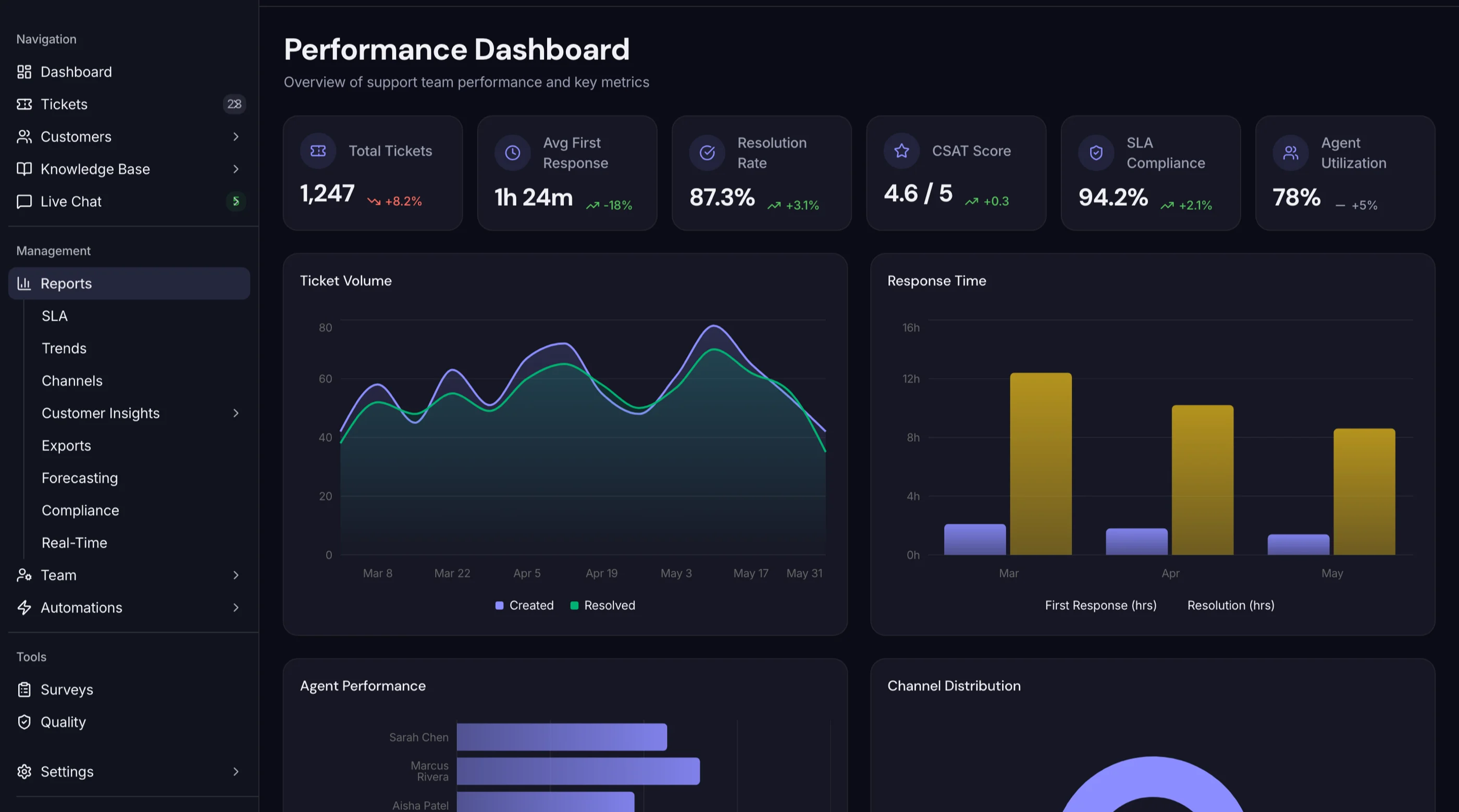
The Help Desk Kit is shipped: 110 screens covering ticket management with SLA tracking, live chat, knowledge base, customer profiles, automations, and team scheduling. One-time, no per-agent fee. Next.js + Tailwind + shadcn/ui, WCAG AA. $131 solo, $199 team, $349 agency. Try the live demo.
Get the Help Desk Kit → or get every kit (18 total) for $749 via All UI Kits →
Zendesk Plans and Prices
Prices are per agent, per month. Annual billing saves 20%.
| Plan | Annual billing | Monthly billing | Who it's for |
|---|---|---|---|
| Support Team | $19 | $25 | Email ticketing only, no help center |
| Suite Team | $55 | $69 | Small teams that want email, chat, messaging, voice and a help center |
| Suite Growth | $89 | $115 | Teams that need SLAs, several help centers and light agents |
| Suite Professional | $115 | $149 | Larger teams that need skills-based routing and data residency |
| Suite Enterprise | Talk to sales | Talk to sales | Custom roles, sandboxes, up to 300 help centers |
| Suite Enterprise Plus | Talk to sales | Talk to sales | Adds disaster recovery and a high-volume API option |
Two things worth knowing:
- Suite Growth has dropped off Zendesk's main pricing cards. It still appears in the full plan comparison and in the help center at $89, but the page now pushes Team, Professional and Enterprise. If you want Growth, ask for it by name.
- Support Team is the cheapest way in, but it's ticketing and email only. Most people who say "we want Zendesk" mean Suite, because the help center and messaging do a lot of the work.
What Each Suite Tier Adds
| Feature | Team | Growth | Professional | Enterprise |
|---|---|---|---|---|
| Help centers | 1 | Up to 5 | Up to 5 | Up to 300 |
| Light agents included | None (add-on) | 50 | 100 | 1,000 |
| SLAs | No | Yes | Yes | Yes |
| Skills-based routing | No | No | Yes | Yes |
| Side conversations | No | No | Yes | Yes |
| Data center location | No | No | Yes | Yes |
| HIPAA enabled | No | No | Yes | Yes |
| Sandbox | No | Add-on | Add-on | Up to 2 included |
| Custom agent roles | No | No | No | Yes |
| AI automated resolutions included | 5 per agent/mo | 10 per agent/mo | 10 per agent/mo | 15 per agent/mo |
Light agents can view tickets and leave internal notes but can't reply to customers. If people outside support touch tickets occasionally, the jump from Team (none) to Growth (50) matters a lot.
Zendesk AI Pricing
This is where most bills grow.
Automated resolutions. Zendesk's AI agents are billed per resolution, meaning each conversation the AI closes without a human. Every plan includes some: 5 per agent per month on Support Team and Suite Team, 10 on Growth and Professional, 15 on Enterprise, capped at 10,000 a year. Beyond that, Zendesk's pricing page lists $1.50 per resolution if you commit in advance and $2.00 pay-as-you-go.
Zendesk also introduced "resolution tiers" in May 2026, which price assisted, contained and verified resolutions differently. Its help center hasn't published final per-tier prices yet, so confirm the rate with sales before you budget.
Copilot. The agent-assist add-on (suggested replies, ticket summaries, auto-assist) costs $50 per agent per month and is sold on Suite Professional and above. Professional and Enterprise include a small taste: 5 uses per agent per month of the writing tools and summaries.
A worked example. A 20-agent team on Professional gets 200 automated resolutions a month. If the AI agent closes 1,000 conversations a month, the extra 800 cost $1,200 a month at the committed rate, or $14,400 a year. That's half again on top of the $27,600 plan cost.
Zendesk Add-On Prices
| Add-on | Annual billing | Monthly billing |
|---|---|---|
| Copilot | $50 per agent/mo | $50 per agent/mo |
| Workforce Engagement bundle | $50 per agent/mo | $65 per agent/mo |
| Quality Assurance | $35 per agent/mo | $45 per agent/mo |
| Advanced Data Privacy & Protection | $50 per agent/mo | $65 per agent/mo |
| Contact Center | $83/mo, bought on top of a Suite plan | |
| Extra messaging users | 1,000 monthly active users included, then $50 per 2,500 |
Zendesk doesn't publish prices for extra light agents, extra sandboxes or the Collaboration add-on. Those come from sales.
Zendesk Talk (Voice) Costs
Voice is included in Suite, but calls are metered. From Zendesk's help center, for US numbers:
- Phone numbers: $1/month local, $2/month toll-free
- Inbound calls answered in the browser: $0.016 per minute
- Outbound calls to the US and Canada: $0.019 per minute
- Call recording: $0.003 per minute
- Transcription: $0.01 per minute after the call, $0.027 per minute live
For a team taking 10,000 inbound minutes a month, that's about $160 a month in call minutes before recording.
What You'll Actually Pay per Year
Plan cost only, before AI, add-ons and voice.
Billed annually:
| Team size | Suite Team | Suite Growth | Suite Professional |
|---|---|---|---|
| 5 agents | $3,300 | $5,340 | $6,900 |
| 20 agents | $13,200 | $21,360 | $27,600 |
| 50 agents | $33,000 | $53,400 | $69,000 |
Billed monthly:
| Team size | Suite Team | Suite Growth | Suite Professional |
|---|---|---|---|
| 5 agents | $4,140 | $6,900 | $8,940 |
| 20 agents | $16,560 | $27,600 | $35,760 |
| 50 agents | $41,400 | $69,000 | $89,400 |
Add Copilot and a 20-agent Professional team goes from $27,600 to $39,600 a year. The per-agent model means cost follows headcount rather than ticket volume, so a team that doubles pays double whether or not tickets grew.
Zendesk vs Competitors on Price
Per agent per month, billed annually, from each vendor's pricing page in September 2026:
| Tool | Entry | Mid | Top published | Free plan |
|---|---|---|---|---|
| Zendesk Suite | $55 (Team) | $89 (Growth) | $115 (Professional) | No, 14-day trial |
| Freshdesk | $19 (Growth) | $55 (Pro) | $89 (Enterprise) | No |
| Help Scout | $25 (Standard) | $45 (Plus) | $75 (Pro, 10-user minimum) | Yes, 5 users |
| Zoho Desk | $7 (Express) | $23 (Professional) | $40 (Enterprise) | Yes, 3 users |
Freshdesk is the closest like-for-like, and its entry plan is a third of Zendesk Suite Team's price. Zoho Desk is the cheapest full help desk. Help Scout is the pick for small teams that mostly handle email. We compare all of them in Zendesk Alternatives and Freshdesk Alternatives.
Discounts: Annual Billing, Startups and Nonprofits
- Annual billing: 20% off every plan.
- Zendesk for Startups: eligible startups can get Zendesk free for 6 months as standard, and up to 2 years depending on funding stage and partner, for up to 50 agents.
- Nonprofits: there's no published percentage discount. Zendesk's Tech for Good program gives free software to selected nonprofits by application.
- Volume: Enterprise is always negotiated, and larger teams on any plan can ask.
Is Zendesk Worth It?
Often, yes. Zendesk is the most complete help desk in the category, the integration ecosystem is the biggest, and at scale the routing and reporting earn their cost. With 50 agents, complex routing and several brands, few alternatives compete.
The teams that regret it tend to look alike: under 15 agents, using email and a help center and little else, on Professional because one feature they needed sat behind it. That's a lot of money for a shared inbox with a knowledge base attached.
Three questions before your renewal:
- How much of the plan do you use? Pull the feature list for your tier and mark what you touched this quarter.
- Is cost tracking value or headcount? If ticket volume is flat and the bill grew, the model is the problem.
- Would a lower tier plus one add-on work? Teams often upgrade a whole plan for a single capability.
Cheaper Ways to Get the Same Job Done
Hosted and cheaper: Freshdesk, Zoho Desk and Help Scout all undercut Zendesk at every tier (see the table above).
Open source: Zammad, FreeScout and Chatwoot are free to license, so the cost becomes hosting plus the person who runs it. That's cheaper at scale, and more work. We compare all three in Zendesk Alternatives.
Build support into your own product. This changes the model rather than the price. Instead of paying per agent forever, you own the interface and pay once. It only makes sense if support is part of the product experience, or you're shipping support tooling to your own customers.
The Help Desk Kit covers that path: 110 screens with threaded tickets, internal notes, a Kanban triage board with SLA indicators, live chat with queue management, a knowledge base editor, customer profiles, and agent performance analytics. It's the frontend only, so you supply the backend, the real-time layer and email delivery. No per-agent fee, ever.
Frequently Asked Questions
How much does Zendesk cost per agent?
Support Team is $19 per agent per month billed annually ($25 monthly). Zendesk Suite is $55 on Team, $89 on Growth and $115 on Professional billed annually, or $69, $115 and $149 billed monthly. Enterprise and Enterprise Plus are quote-only.
Does Zendesk have a free plan?
No. Zendesk offers a 14-day free trial of Suite Professional with no credit card. Eligible startups can get it free for 6 months or longer through Zendesk for Startups. If you need a permanent free help desk, Help Scout's free plan covers 5 users and Zoho Desk's covers 3.
How much does Zendesk AI cost?
Each plan includes 5 to 15 automated resolutions per agent per month. Beyond that, Zendesk's pricing page lists $1.50 per resolution committed or $2.00 pay-as-you-go, though its newer resolution-tier model may price differently. Copilot, the agent-assist add-on, is $50 per agent per month on Suite Professional and above.
What happened to Zendesk Suite Growth?
It's still available at $89 per agent per month billed annually, but Zendesk no longer shows it on the main pricing cards. You'll find it in the full plan comparison, or you can ask sales for it.
What is the difference between Zendesk Support and Zendesk Suite?
Support Team is ticketing and email on its own, for $19 per agent. Suite adds messaging, live chat, voice, a help center and AI agents, starting at $55. Most teams end up wanting the help center, which puts them on Suite.
Why is my Zendesk bill higher than the advertised price?
Usually one of five things: you're on monthly rather than annual billing (25 to 30% more), you went over your included AI resolutions, you added Copilot or another per-agent add-on, your agent count grew, or voice minutes and phone numbers are billed on top.
Is Freshdesk cheaper than Zendesk?
Yes. Freshdesk Growth is $19 per agent per month against $55 for Zendesk Suite Team, both billed annually. The gap closes higher up: Freshdesk Pro and Zendesk Suite Team are both $55. Zendesk stays ahead on ecosystem depth. See Freshdesk Alternatives for the full comparison.
How can I reduce Zendesk costs without switching?
Move to annual billing for 20% off. Use light agents for people who only read and comment, since Growth includes 50 and Professional 100. Drop a tier if one feature drove the upgrade. Watch your automated resolution count against what's included. And improve your help center, because the cheapest ticket is the one that never opens.
The Honest Take
Zendesk's pricing isn't unreasonable for what it does. It is expensive for what most small teams use it for.
If you're over 20 agents with real routing complexity, pay and move on. If you're under 15 and the honest answer is email, a help center and some macros, you're paying for features you never open, and a cheaper hosted tool or an open-source desk will do the same job.
And if support is part of your product rather than a department, the per-agent model is the wrong shape entirely. That's the case for owning the interface.